The London Assembly Transport Committee is investigating the impact that driverless taxis could have on congestion, as the capital prepares for an influx of self-driving taxis.
Companies like Uber and Wayve are hoping to begin rolling-out driverless taxis across London this summer. Initially, the vehicles will have a human driver ready to take the wheel if needed, with complete autonomy only becoming available once the technology is proven to be safe.
However, concerns have been raised that an increase in self-driving vehicles on London’s roads could directly contradict the Mayor’s Transport Strategy (MTS) which aims for a traffic reduction of up to 15%, and for 80% of all trips in the city to be made by public or active transport.
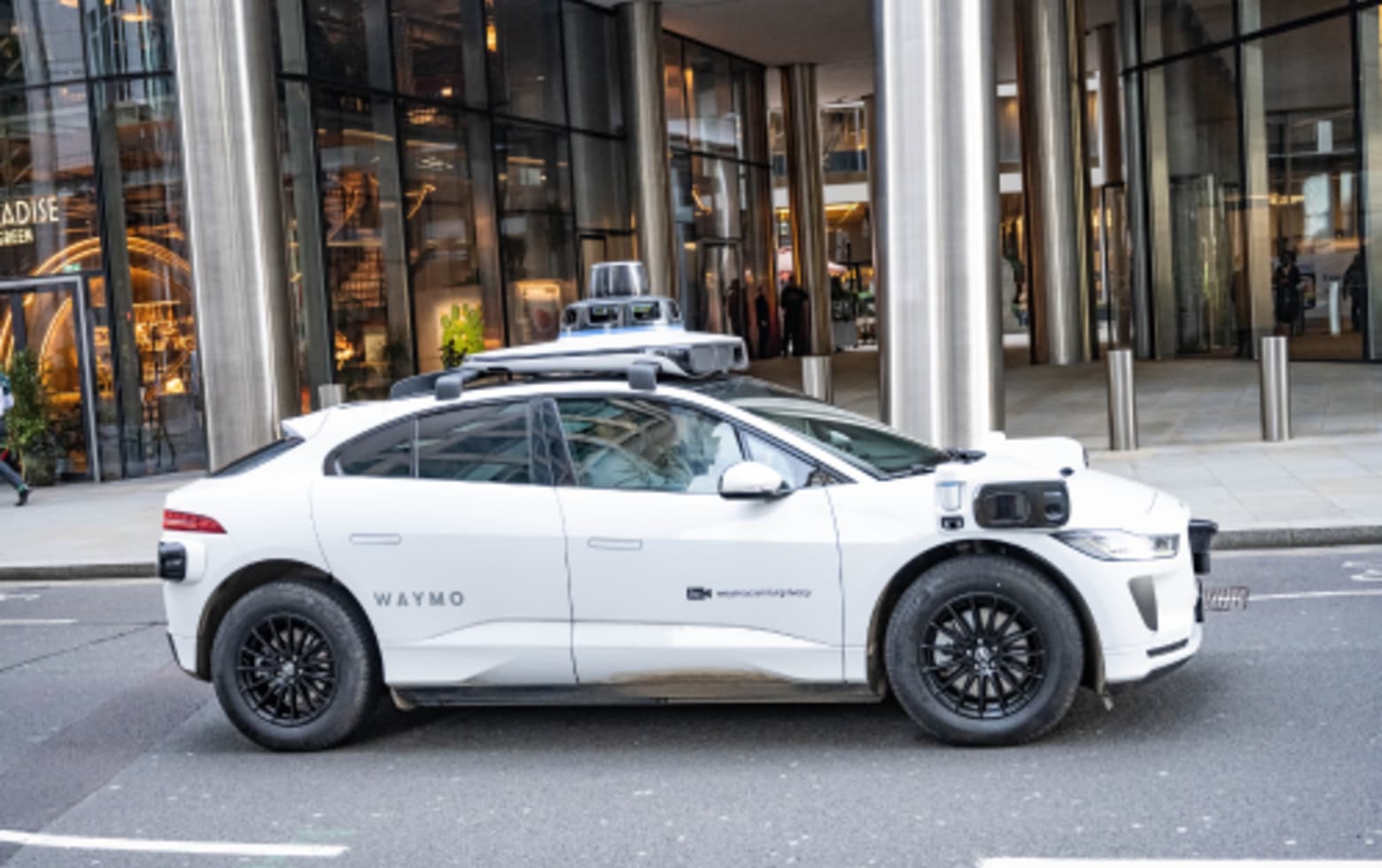
The imminent nature of the driverless taxi rollout prompted the London Assembly Transport Committee to launch an investigation into how these vehicles should be regulated.
During their first evidence session last week, Thomas Ableman, former Director of Strategy and Innovation at Transport for London (TfL), said that autonomous passenger vehicles can make a contribution to the MTS, provided that the correct regulation is put in place in time. He suggested that policymakers should look to Oslo for inspiration, with the Norwegian capital ensuring that autonomous vehicles are being directly integrated into the wider network by operating in areas least served by public transport – helping people get to rail and bus stations from afar. This approach would be an alternative to adding another private hire fleet onto London’s already congested roads.
Ableman warned that without driver restrictions, the number of driverless taxis could go unchecked, leading to delays in bus services which could cause more people to drive rather than using public transport. He also noted that Oslo has already achieved Vision Zero, a global strategy to eliminate all traffic fatalities and severe injuries, which is a current aim of the Mayor of London for London’s transport network.
The aviation expert also claimed that policymakers have a limited window to bring in clear regulation, while the technology is still expensive and the numbers deployed are limited.
Some political parties, including the Greens in Brent, have already campaigned against the trials due to the potential impact on London’s taxi trade. Concerns have also been raised in the borough after a Waymo vehicle drove into an active crime scene in Harlesden.