On Monday 26 October, the section between Orchard Street and Great Portland Street became traffic-free, marking the first step in Oxford Street’s pedestrianisation scheme – which is expected to be finished by spring 2027.
The change comes as part of an initiative to make Oxford Street a greener, more accessible and welcoming space.
No cars, buses, taxis, scooters, pedicabs, or bikes will be allowed through, allowing more space for people to navigate around the busiest shopping street in Europe.
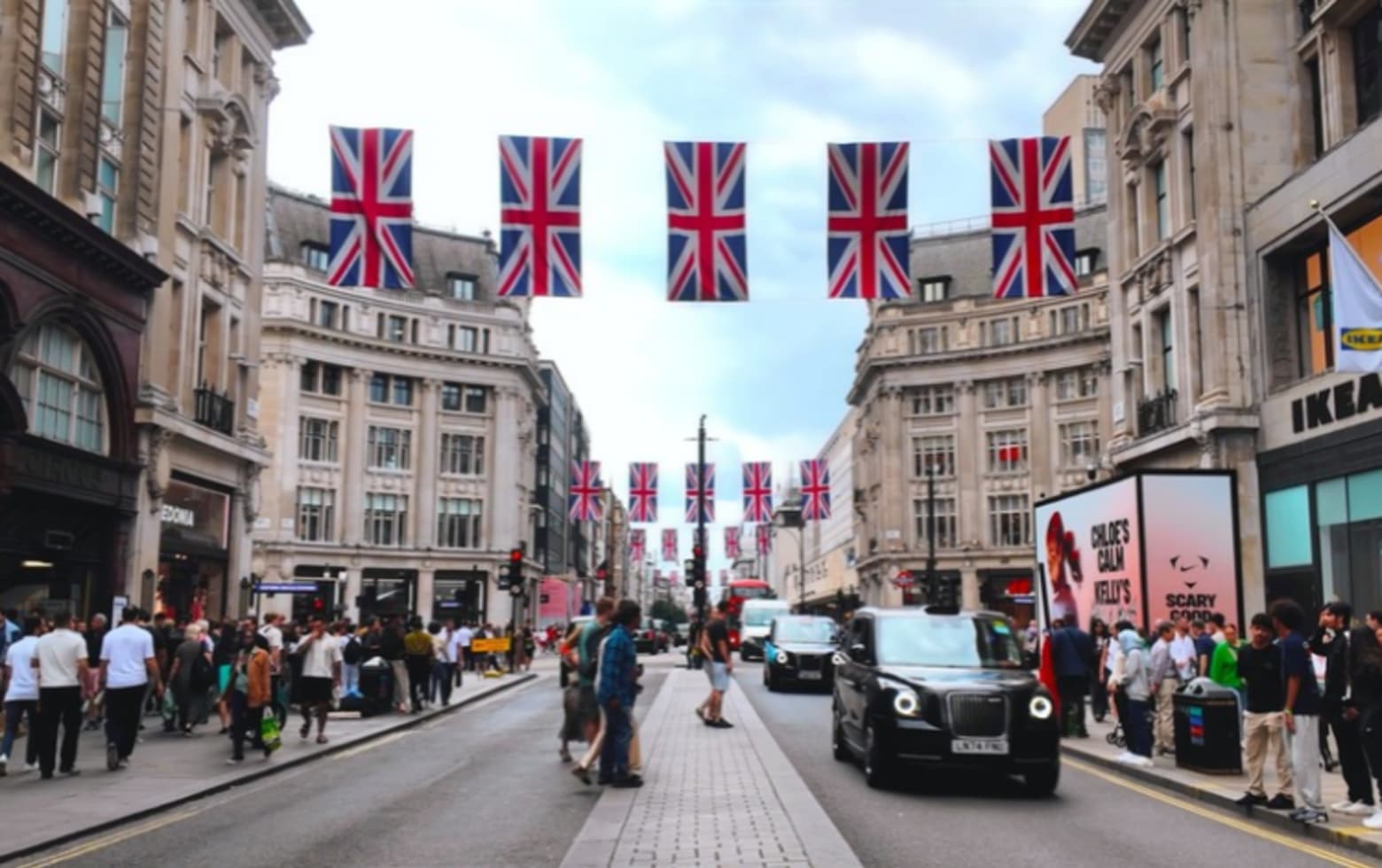
The newly pedestrianised route means that some crossing points have changed, and traffic can move in different patterns and flows in the surrounding area. Signs with route-finding information have been installed in the area to assist visitors through the changes.
Retractable barriers have been designed with emergency vehicle access in mind and will go flat to allow deliveries to stores between midnight and 7am each day.
Transport for London (TfL) has announced that bus routes in the traffic-free area will be redirected to new or nearby bus stops that are approximately 200 meters away. TfL’s Commissioner, Andy Lord, said that they’ll be closely monitoring the changes to make sure they are working for everyone and supporting the continued economic growth London needs. The transport authority advises that you plan your journey ahead of time and check to see whether your route has changed.
An increase in traffic is expected on Wigmore Street, Cavendish Place, Henrietta Place, Marylebone Lane and Welbeck Street, alongside an increase in traffic noise, because of the changes. However, improvements in air quality are expected in several locations in the Oxford Street west area.
CILT(UK) have supported the ambition to create a more people-focused environment in Oxford Street, stating in our consultation response back in January 2026, that removing through-traffic from Oxford Street creates an “opportunity” to “improve the pedestrian experience, reduce collision risk, lower noise levels and create a setting more appropriate for one of London’s most important retail streets”.
However, the Institute believes that accessibility must remain at the “heart” of the transition. Buses remain the “most accessible option” for many disabled people, due to the walking distance to the nearby tube stations, therefore “high-quality crossings, step-free access points, generous seating provision, clear wayfinding signage and accessible taxi and bus interchange points” are all required in order to create a street that is genuinely inclusive.
BBC journalists reported on the day that many members of the public were not aware of the changes, with cyclists having to dismount and reroute their journeys – with many ignoring the signs and street security to ride on. Tom Faynes, chief executive of the London Cycling Campaign, told the BBC that new cycle lane routes are needed both north and south of Oxford Street to provide an alternative to the pedestrianised area, as thousands of cyclists come through every day.
London Mayor, Sir Sadiq Khan, told the BBC that the street's retailers face fierce competition from online stores, therefore its pedestrianisation will encourage more shoppers to visit in the lead up to Christmas. Experts say that other examples of pedestrianisation and pavement expansion are good indicators of the potential impact to Oxford Street, with Bond Street and New York’s Times Square both seeing a huge uplift in revenue and footfall.